Research
The overall goal of our research program is to elucidate the molecular basis underlying the evolution of novel physiological traits in arthropods as well as their adaptation to diverse and extreme environments. Although we do not limit our research program to specific organisms or traits, the current projects mainly focus on the traits that contribute to desiccation resistance/tolerance and adaptation to dry habitats including the extremely dry deserts. We will also investigate the molecular basis underlying physiological adaptation of agricultural and horticultural pests.
In our research, we take a comparative approach to investigate the key genetic changes that lead to the evolution and development of novel physiological traits. In the lab, we use interdisciplinary technologies (molecular biology, analytical chemistry, and computational biology) to elucidate the underlying molecular mechanisms. Below are some research directions in our lab.
- Determining genetic mechanisms underlying desert adaptation in Drosophila species
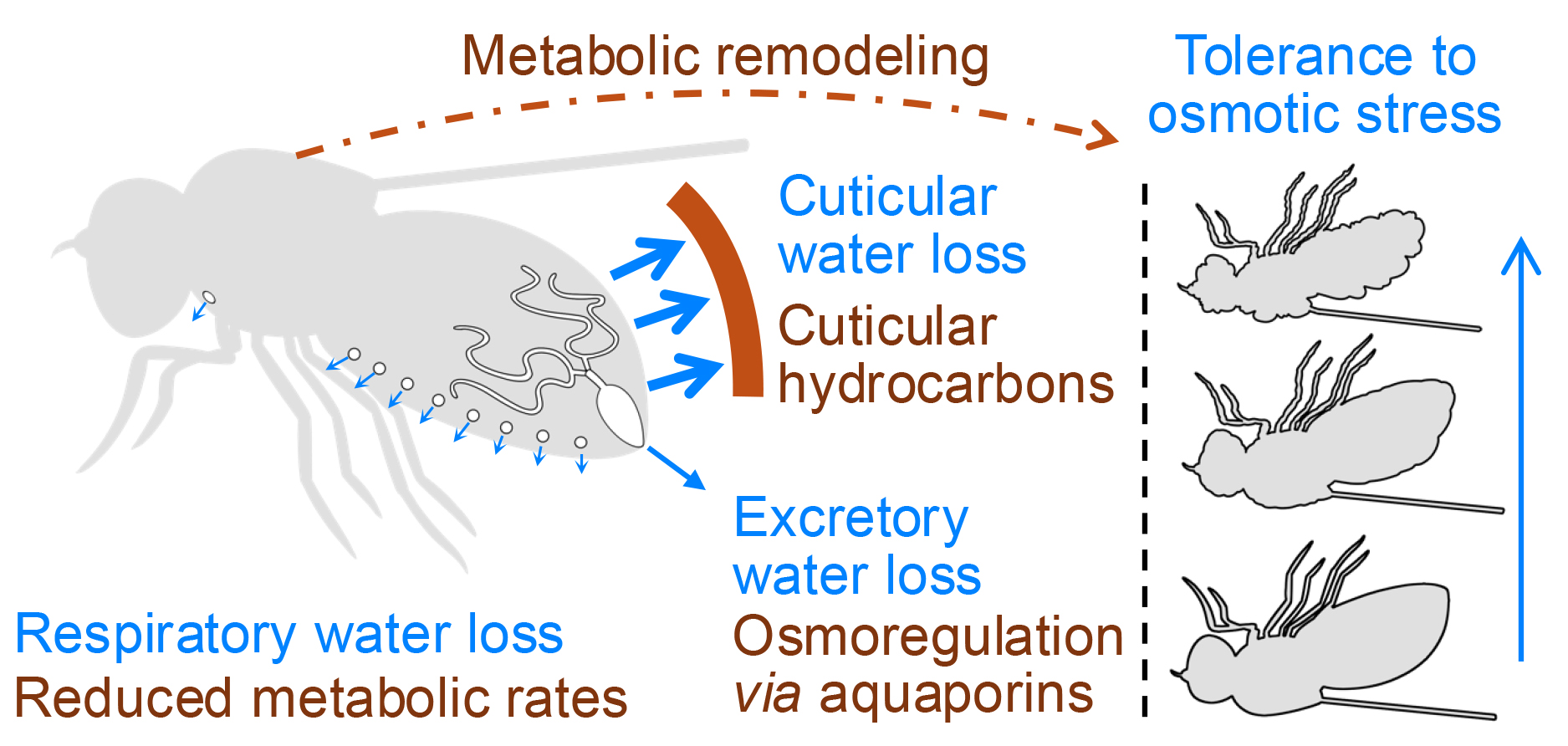
Several Drosophila species, including Drosophila mojavensis, have evolved and adapted to extremely dry desert environments. A suite of physiological traits has been described for their adaptation, including the use of very long chain cuticular hydrocarbons (Wang et al., 2022; Wang et al., 2023), osmoregulation, low metabolic rates, and the ability to survive higher water loss. We aim to elucidate the genetic changes underlying these novel physiological traits.
- Determining molecular basis underlying independent evolution of cuticular hydrocarbon (CHCs) biosynthesis in arthropods
The use of CHCs are a major mechanism for insects developing desiccation resistance and adapt to diverse terrestrial environments (Wang et al., 2022). In another terreatrial lineage of arthropods, Chelicerata, many of them independently evolved the ability to produce CHCs. In particular, the desert hairy scorpion Hadrurus arizonensis, also uses CHCs as a major mechanism to develop desiccation resistance and adapt to dry deserts. However, it is not known which tissue these arthropods use to synthesize CHCs and what genes are involved. In this research direction, we aim to elucidate the molecular basis underlying their ability to produce CHCs and test the ecological roles of CHCs in the desert scrorpion and other arthropod species.
- Determining the wax synthesis physiology and genetics in scale insects
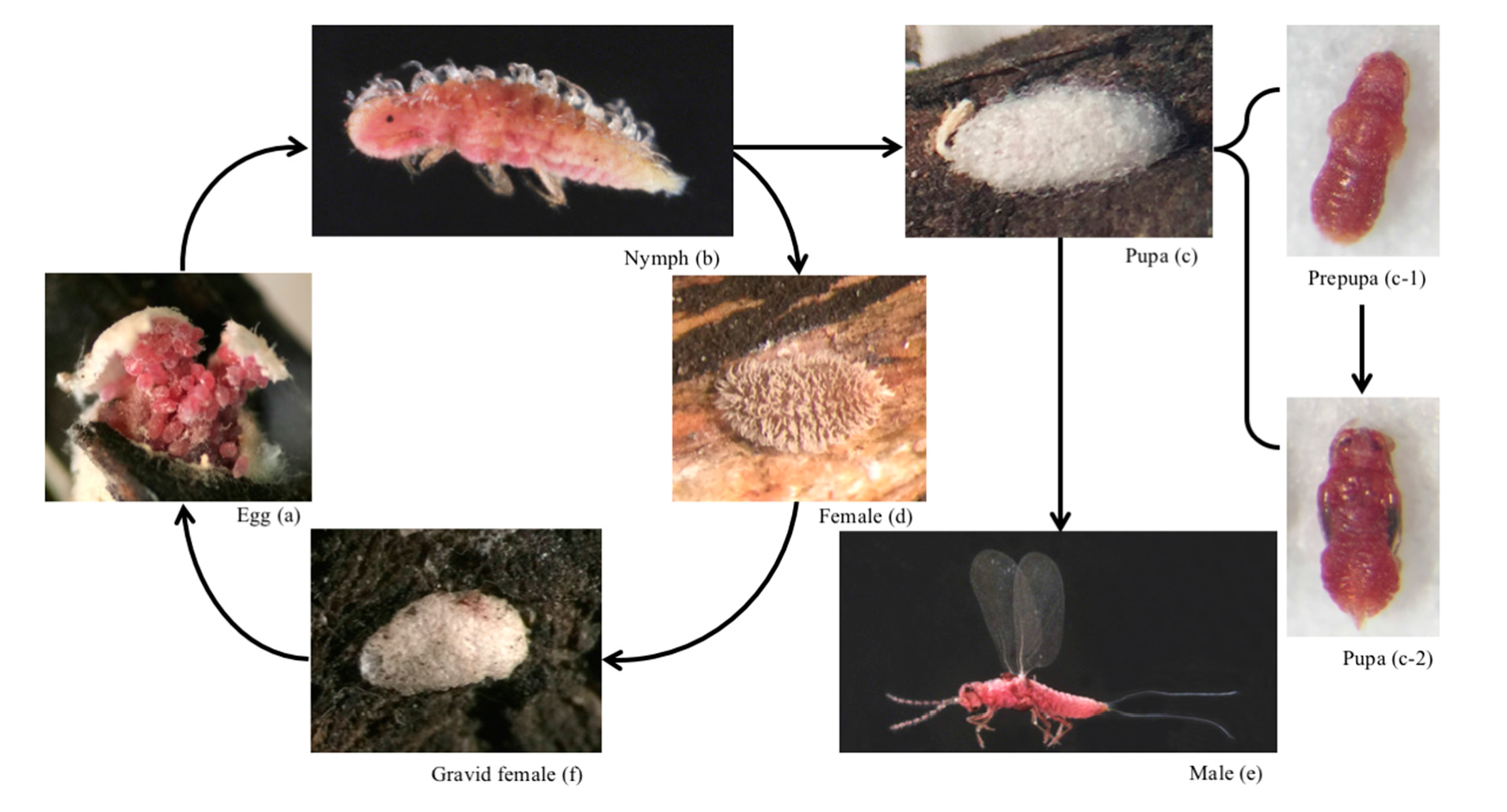
Scale insects in the superfamily Coccoidea (Hemiptera) include many agricultural and horticultural pests of economic importance. Most scale insects produce waxy substances at different life stages to protect them from desiccation and predators and provide a suitable microhabitat for their development. This also makes the chemical control of these scale insect pests more difficult because the wax covering of scale insects usually blocks a large portion of applied insecticides. In this research direction, we use an invasive scale pest, the crapemyrtle bark scales (Wang et al., 2016; Wang et al., 2019a; Wang et al., 2019b; Wang et al., 2019c), as a focus species to investigate its wax synthesis physiology and genetics. We will also extend our research to the other scale insect species and some hemipteran insect pests.
 ArthropodMolBioLab